
Track every asset in one live inventory
Secfix discovers every device, cloud resource, and information asset, assigns owners and classification, and keeps your inventory audit-ready.

%201.svg)
%201.svg)
%201%20(1).svg)
.svg)


Every asset discovered automatically
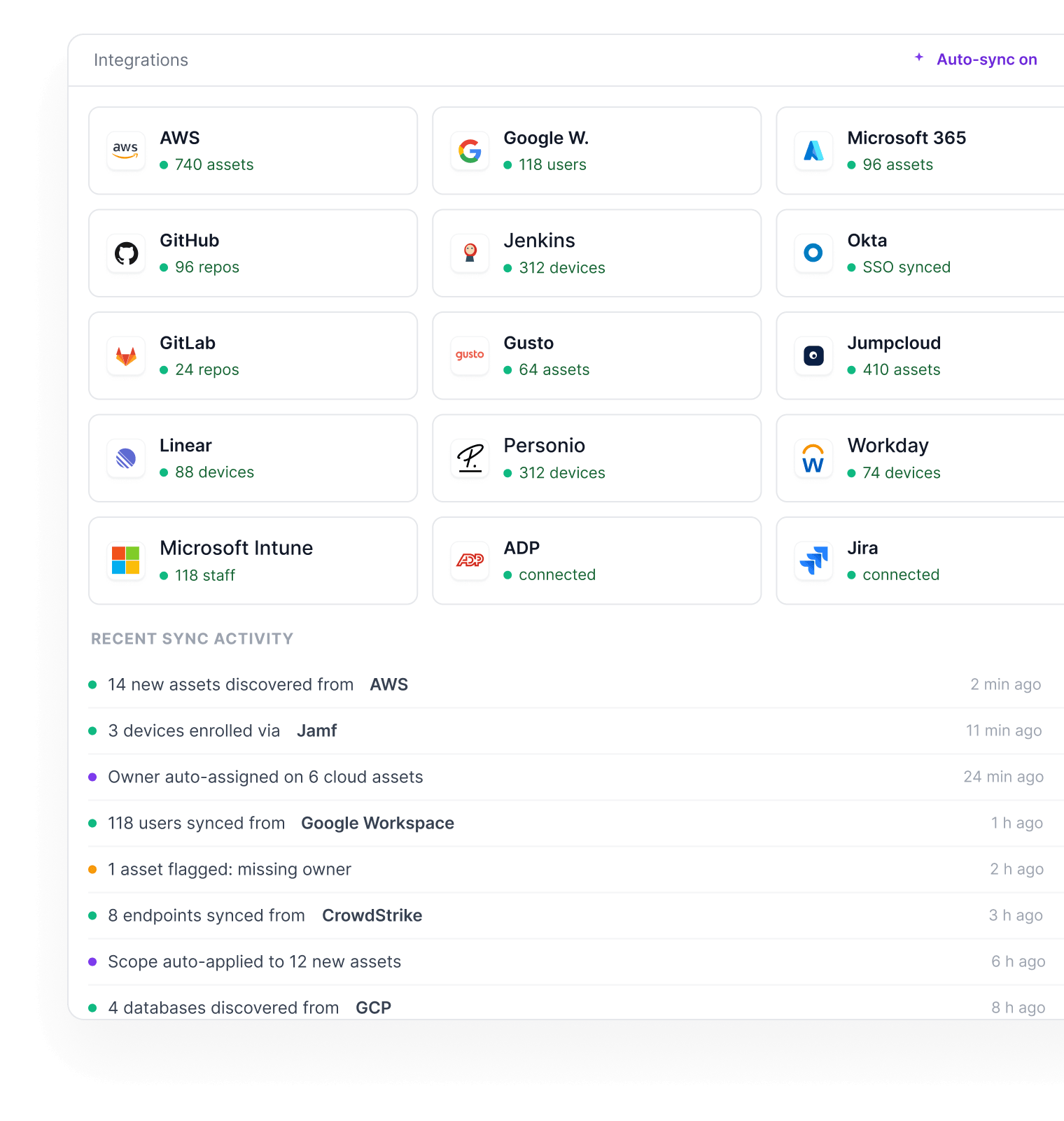
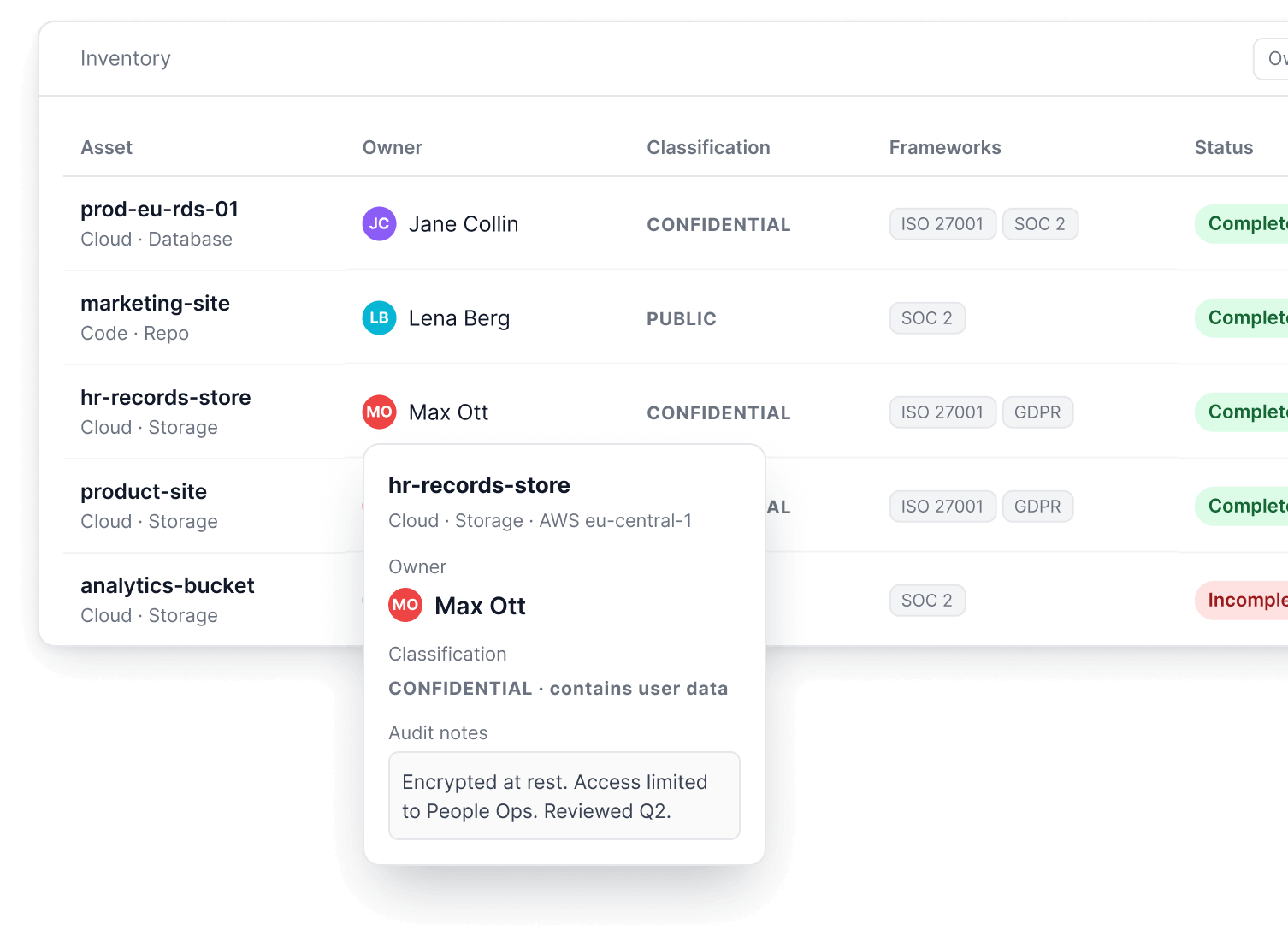
Secfix builds your inventory from the tools you already run. Connect AWS, Azure, GCP, Google Workspace, Office 365, Microsoft Intune, Jamf, and 100+ other integrations, and every Mac, Windows, and Linux device plus every cloud resource shows up in one place.
On-premise servers, firewalls, NAS systems, and other hardware go in as custom assets, by bulk Excel import.

Owners and classification assigned on every asset
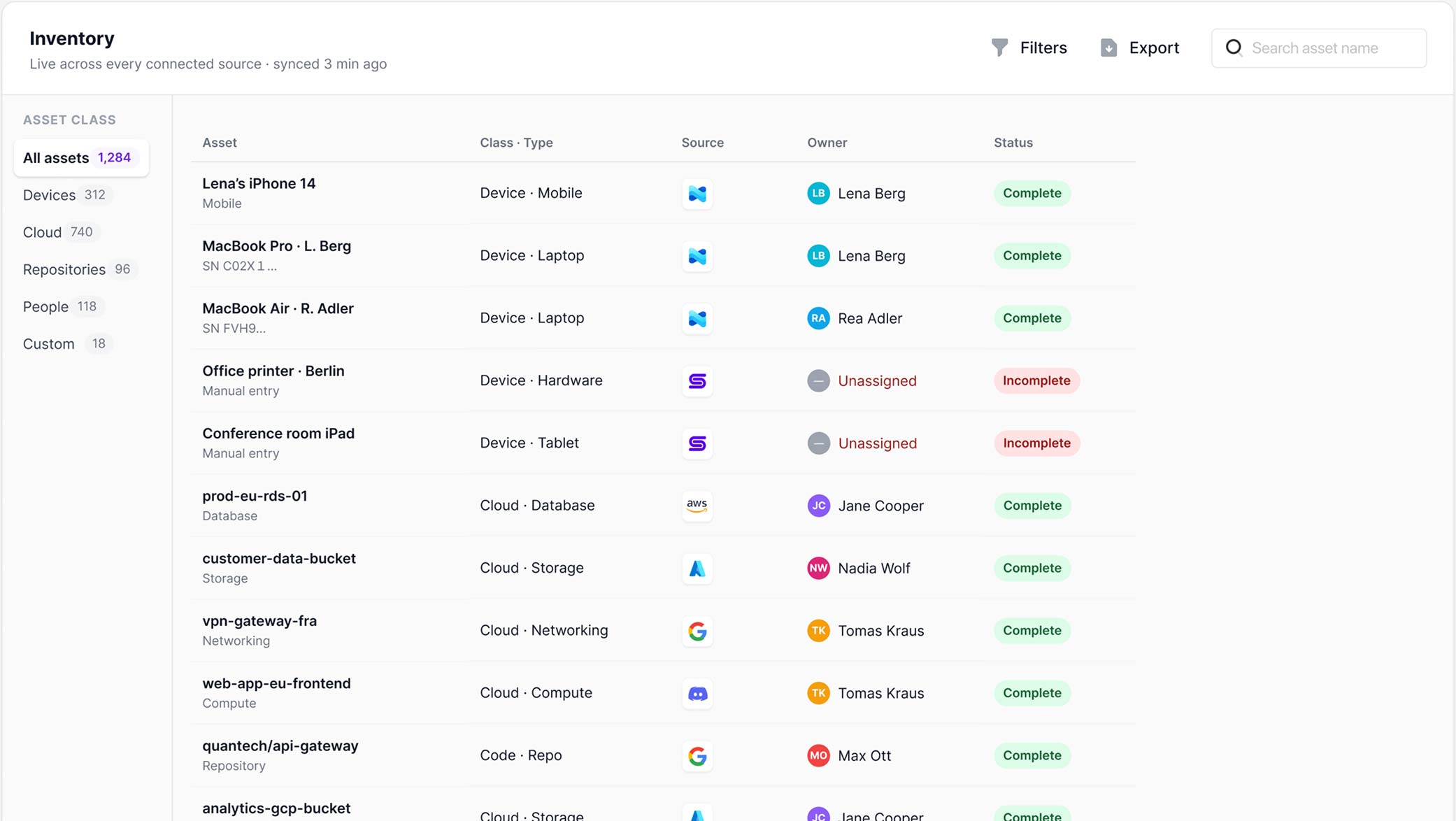
The most common reason an inventory fails an audit is missing owners and descriptions. Auditors flag service accounts, cloud resources, and devices that no one is clearly accountable for. Secfix lets you assign owners in bulk, classify each asset as internal or confidential, and add the descriptions auditors expect.
Continuous checks show you what is still incomplete before the auditor does, so you walk into the audit without surprise non-conformities.
One inventory for all frameworks, not multiple spreadsheets
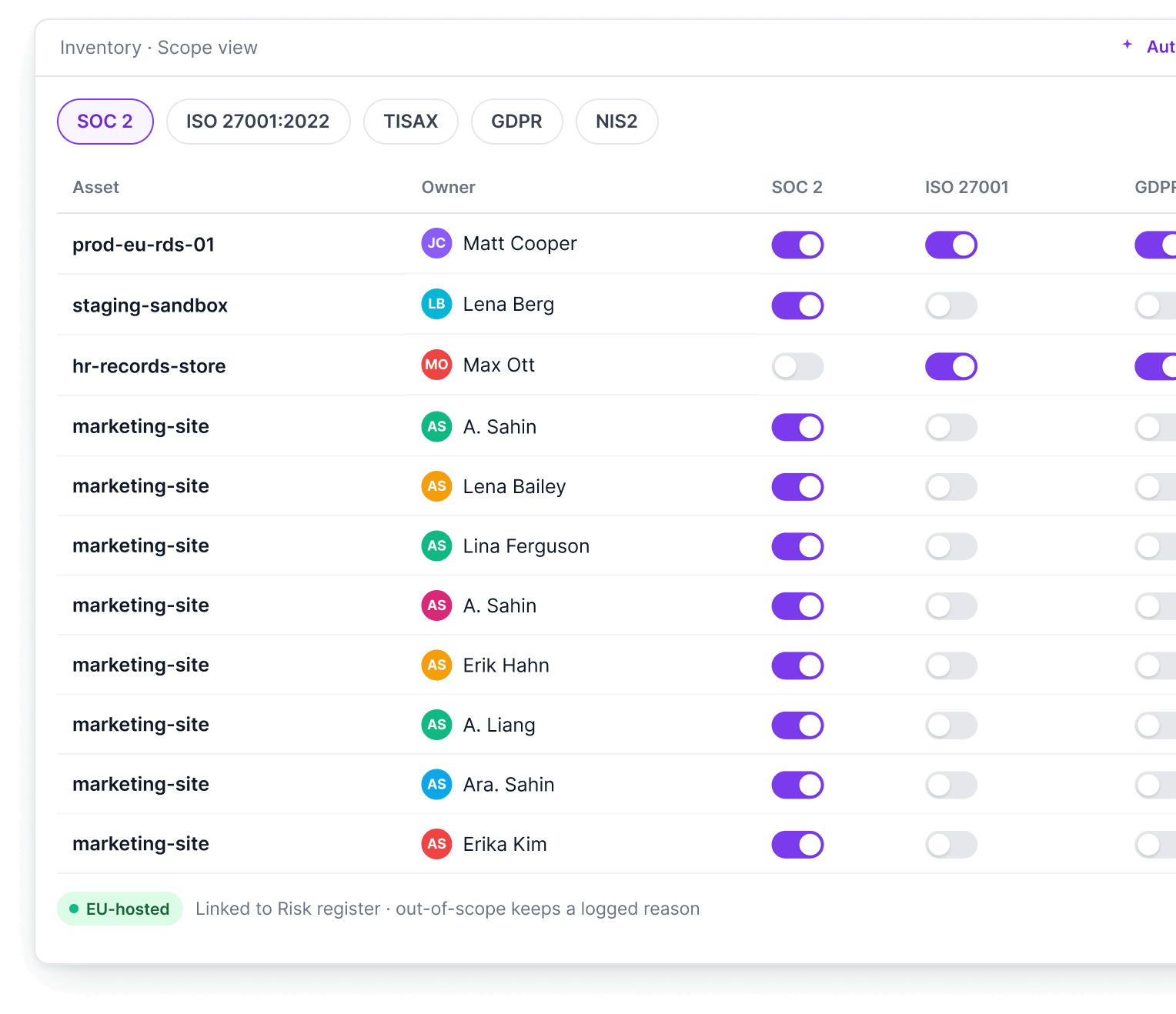
Most teams already track assets somewhere: a spreadsheet, Jira Assets, an equipment tool. Maintaining a second copy for the audit is wasted work. Secfix becomes the single inventory your ISMS runs on, mapped to ISO 27001, SOC 2, TISAX, NIS2, ISO 42001, DORA, and more at the same time.
Mark assets in or out of scope, track information assets alongside hardware and cloud, and hand your auditor one source of truth instead of a folder of exports.
What our customers say about us

“Secfix enabled us to achieve the ISO 27001 certification swiftly and efficiently, a success we could not have accomplished without them.”


“I’d recommend Secfix in a heartbeat. Secfix made our journey to ISO 27001 certification seamless and fast. "


“The combination of an intuitive platform and knowledgeable team made Secfix the ideal partner for Tanso’s certification journey."


“Secfix is more than just software—it’s a partner who could guide you through the entire process. Secfix offered the perfect combination of the right size, good value for money, and the features we actually needed. "


“I strongly recommend Secfix to any organization that wants to simplify their compliance management and stick to standards. Secfix’s easy-to-use interface, strong documentation management, and helpful reporting features have been key to our successful ISO certification. For any company looking to improve their compliance efforts and see real results, Secfix is a must-have tool.”


“I recommend Secfix to any company starting the journey of ISO 27001 and TISAX compliance with data protection. Their platform and dedicated support made the process much more manageable. In fact, I have already recommended Secfix to several peers in the industry.”

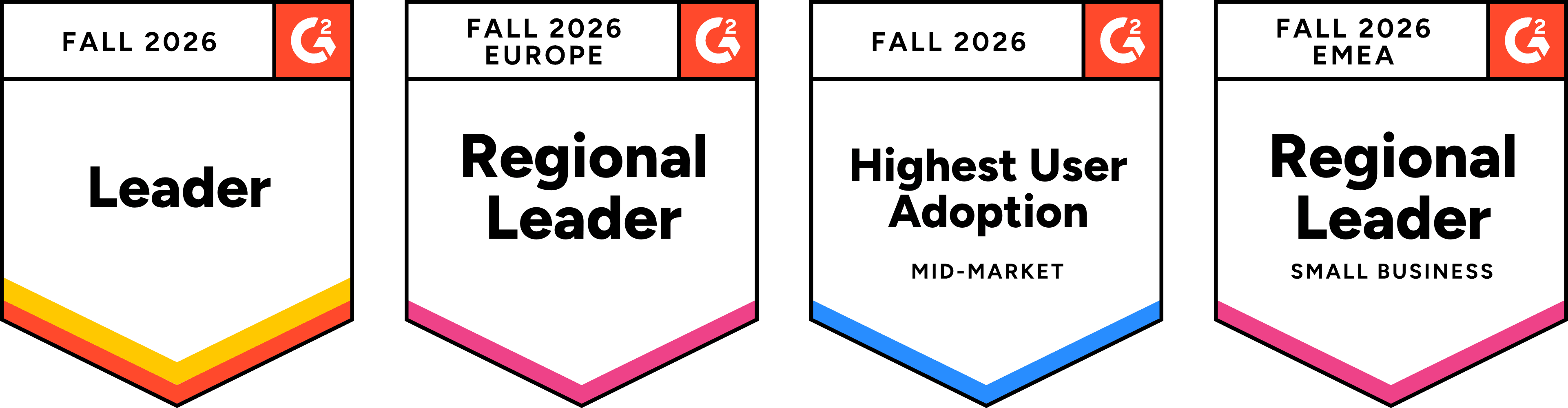
Secfix is rated a leader on G2
Secfix consistently ranks as a G2 industry leader based on hundreds of customer reviews.
FAQs
What is asset management in ISO 27001?
ISO 27001 requires you to keep an inventory of the assets that hold or process information and to assign an owner to each one. Assets include employee devices, cloud infrastructure, servers, software, and information assets such as customer data and core processes. Each asset should be identified, owned, classified, and managed across its lifecycle. Secfix builds and maintains this inventory automatically.
What counts as an asset for an ISO 27001 audit?
For an ISO 27001 audit, an asset is anything that stores, processes, or supports your information. That covers hardware such as laptops, servers, firewalls, and NAS systems, cloud resources such as AWS, Azure, GCP, and Office 365, software and licenses, and information assets such as customer data and source code. Group similar items rather than listing every component, and include any device that accesses company systems.
How does Secfix build my asset inventory automatically?
Secfix discovers assets through 100+ integrations with cloud providers, identity providers, and device tools, including AWS, Azure, GCP, Google Workspace, Office 365, Microsoft Intune, and Jamf. Devices are detected through these integrations or the lightweight Secfix agent.
How does Secfix classify assets?
Secfix lets you classify each asset by sensitivity, usually internal or confidential, in line with your information classification policy. Devices and accounts that hold sensitive data, or belong to people with elevated access, are typically marked confidential. Classification feeds directly into your audit evidence and your risk register.
Does asset management in Secfix cover other frameworks besides ISO 27001?
Yes. One inventory in Secfix maps to ISO 27001, SOC 2, TISAX, NIS2, ISO 42001, DORA, and more frameworks at the same time, so you do not rebuild it for each framework. Assets, owners, and classifications carry across every standard you pursue, and the same evidence supports each audit.