
Thrid-party risk management that runs itself
Secfix finds your vendors automatically, rates each one by risk, and keeps every review on schedule, so your vendor register is always ready for the auditor.


Your third-party list builds itself
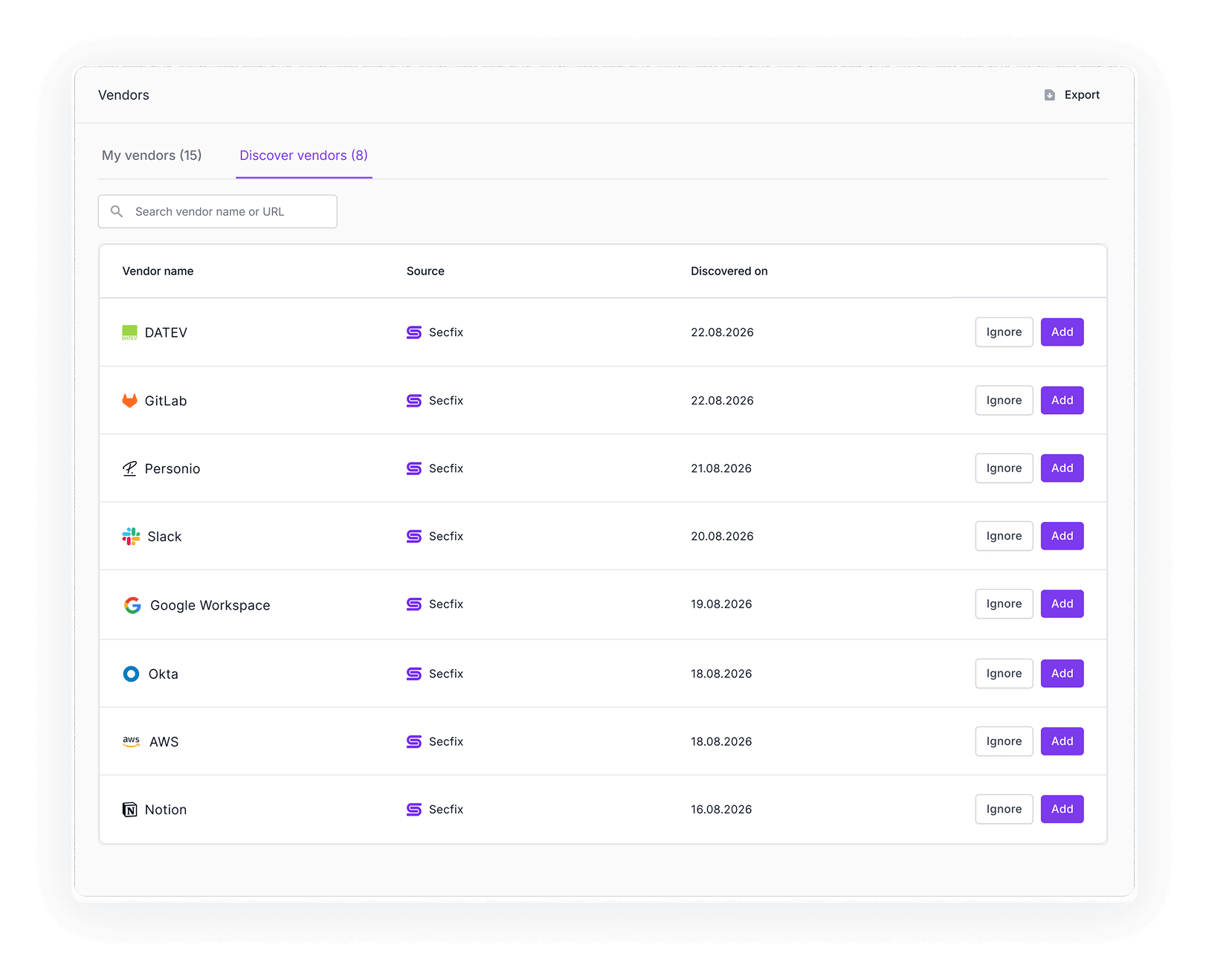
Most vendor lists start in a spreadsheet and are out of date the day they are finished. Secfix discovers vendors through single sign-on and 100+ integrations, so every tool your team logs into is added to your register automatically.
You can still add any vendor by hand, from an offline supplier to your law firm. The result is one live register that shows every third party touching your data, without the manual upkeep.

Every third-party risk-rated, every review on schedule
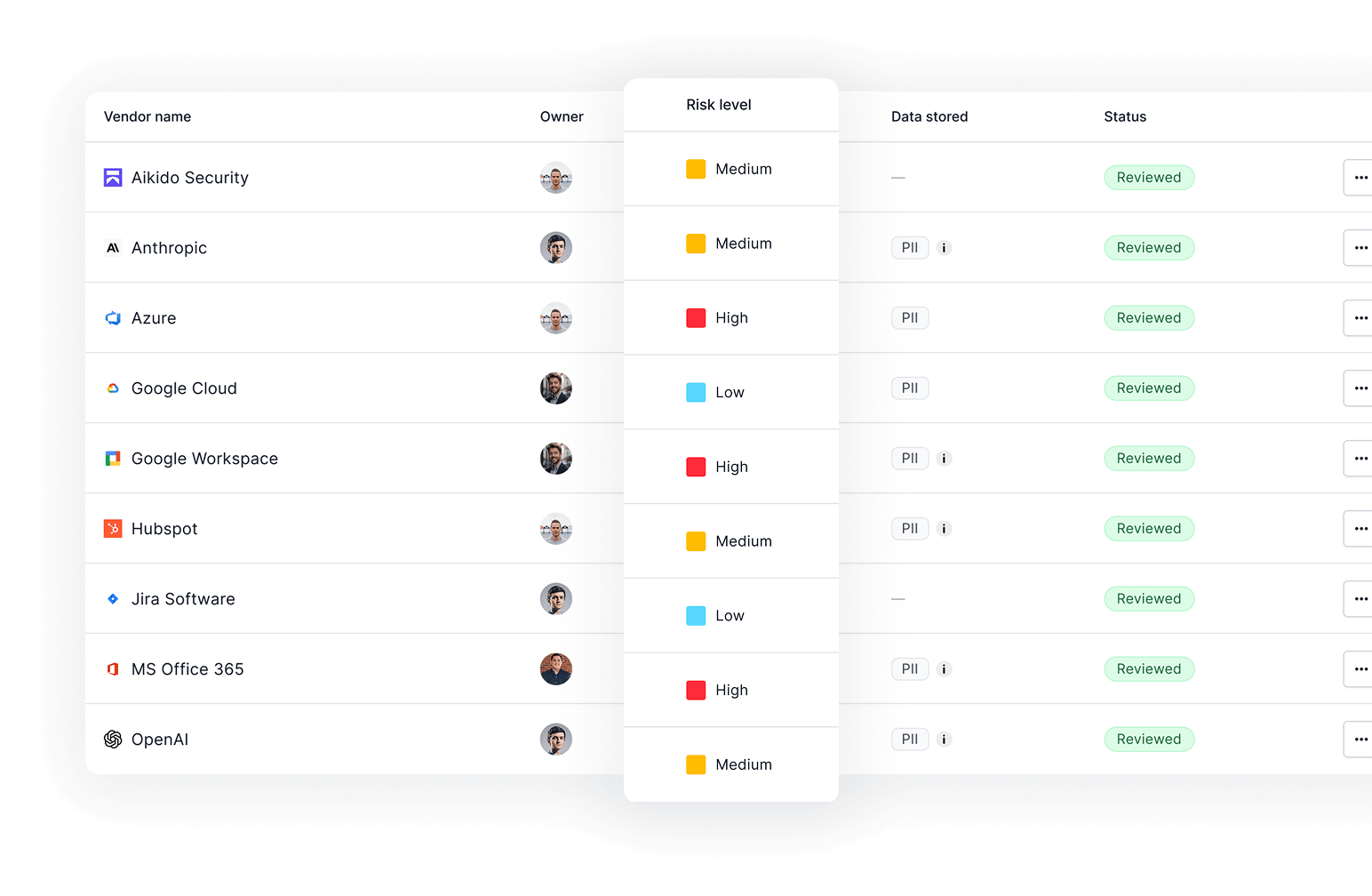
Based on your company's scope, Secfix auto-populates each vendor's details and classifies it as high, medium, or low risk depending on how you use it.
Vendors that touch sensitive data are rated accordingly, so the ratings hold up when your auditor asks. From there, Secfix sends continuous reminders to review each vendor on a regular basis, so nothing lapses between audits.
One view of third-party risk across every framework you run
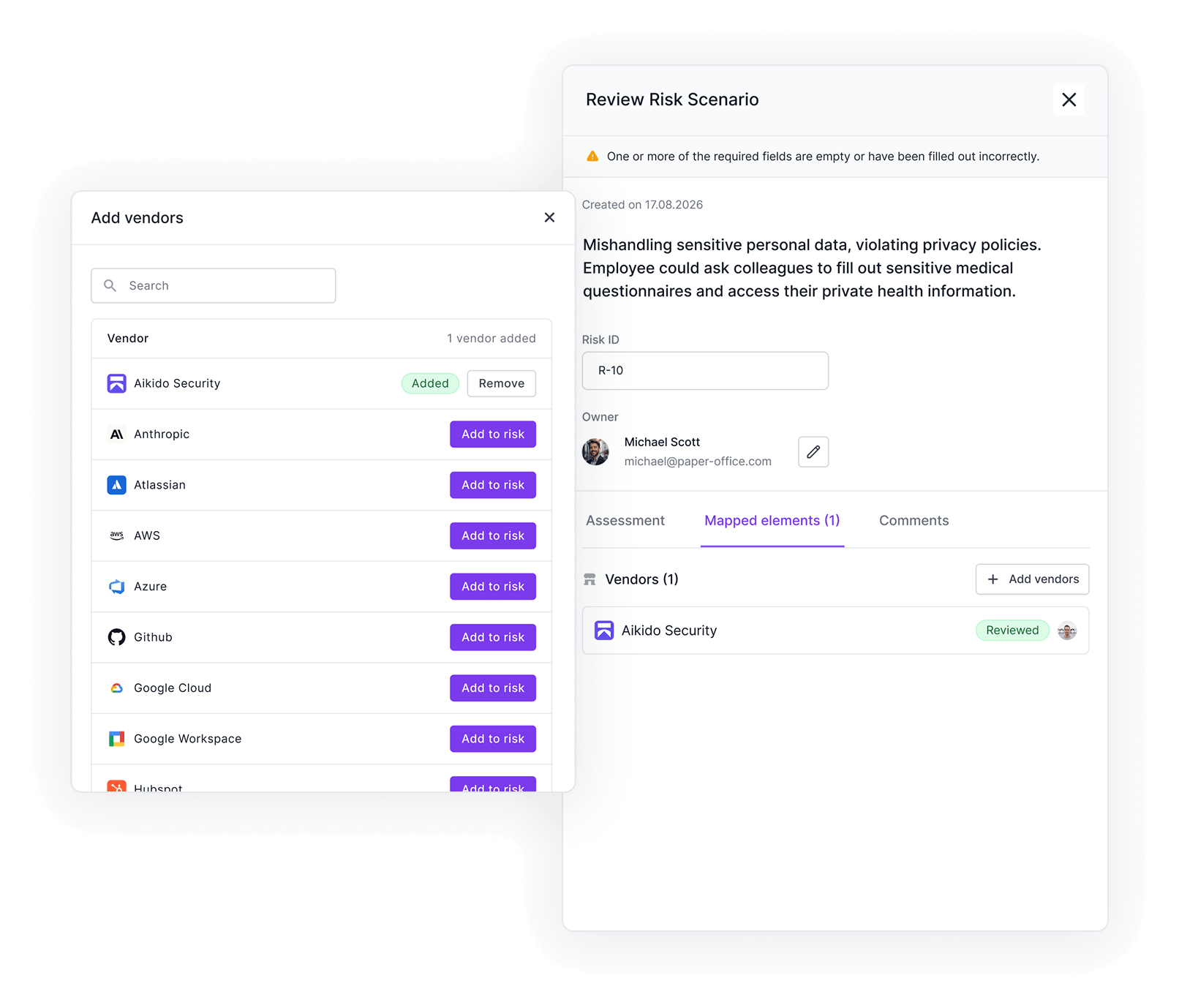
Every vendor connects to your risk register and the controls it affects, so vendor risk is part of one compliance picture, not a list sitting off to the side.
Assess a vendor once and that work counts across every framework you run, whether that is ISO 27001, SOC 2, TISAX, GDPR, NIS 2, or DORA. Add a new standard and your vendor list comes with it, so nobody rebuilds it from scratch.
What our customers say about us

“Secfix enabled us to achieve the ISO 27001 certification swiftly and efficiently, a success we could not have accomplished without them.”


“I’d recommend Secfix in a heartbeat. Secfix made our journey to ISO 27001 certification seamless and fast. "


“The combination of an intuitive platform and knowledgeable team made Secfix the ideal partner for Tanso’s certification journey."


“Secfix is more than just software—it’s a partner who could guide you through the entire process. Secfix offered the perfect combination of the right size, good value for money, and the features we actually needed. "


“I strongly recommend Secfix to any organization that wants to simplify their compliance management and stick to standards. Secfix’s easy-to-use interface, strong documentation management, and helpful reporting features have been key to our successful ISO certification. For any company looking to improve their compliance efforts and see real results, Secfix is a must-have tool.”


“I recommend Secfix to any company starting the journey of ISO 27001 and TISAX compliance with data protection. Their platform and dedicated support made the process much more manageable. In fact, I have already recommended Secfix to several peers in the industry.”

Secfix is rated a leader on G2
Secfix consistently ranks as a G2 industry leader based on hundreds of customer reviews.

FAQs
What is third-party risk management?
Third-party risk management is the process of identifying every third party that handles your data, assessing the risk each one carries, and reviewing them on a regular schedule. Standards like ISO 27001, SOC 2, and TISAX all require it, together with evidence that the reviews actually happen. Secfix replaces the vendor spreadsheet with a live register that discovers vendors, rates them, and tracks every review in one place.
How does Secfix discover third-party tools automatically?
Secfix identifies third-party tools through single sign-on and 100+ integrations, so every tool your team logs into is added to your register without manual entry. You can also add any vendor by hand, for example an offline supplier or a law firm. The register stays current instead of drifting out of date between audits.
Which third-party tools do I need to add to my vendor list?
As a rule, any third party with access to your company or customer data belongs on the list. That includes SaaS tools, cloud providers, and payment processors, but also external service providers such as your data protection officer, law firm, or notary. Secfix helps you classify each one so nothing your auditor expects to see is missed.
How does Secfix rate third-party risk?
Each vendor is classified as high, medium, or low risk based on the data it can access and how sensitive that data is. Vendors that process personal data are flagged, so a low rating does not get challenged during your audit. Every rating is stored with its justification, which is exactly what an auditor wants to review.
What evidence do I need for high-risk third-party tools?
For high-risk third-party tools, auditors expect proof rather than a link to a trust page. In Secfix you can upload the vendor's ISO 27001 or SOC 2 certificate, or send a security questionnaire and keep the response on file. Storing this evidence in one place shows that your annual vendor review meets ISO 27001 requirements.
How often do I need to review my vendors?
Most frameworks expect a vendor review at least once a year, and more often for high-risk vendors. Secfix resets review status on a set cadence and sends reminders before each review is due, so nothing lapses. Your auditor sees a full history of reviews across the year, not a list updated the week before.
Which frameworks does Secfix third-party risk management support?
One vendor register feeds ISO 27001, SOC 2, TISAX, GDPR, NIS 2, and DORA. Assess a vendor once and the evidence maps to the supplier and third-party controls of every framework you are certified against. Adding a second framework does not mean rebuilding your vendor list.
Can I import my existing vendor list?
Yes. If you already track vendors in a spreadsheet, you can bring that list into Secfix and enrich it with risk ratings, owners, and review dates, so you start from what you already have. [VERIFY: confirm self-serve import vs Customer Success assisted import.]
How does Secfix handle DPAs and AI vendors?
Vendors that process personal data, including AI tools, need a data processing agreement and a clear record of what data they handle. Secfix lets you store each vendor's DPA and security documentation next to its risk rating, so your GDPR and EU AI Act obligations are documented in one place.