
How much does TISAX® cost and how long does it take?

Obtaining a TISAX® (Trusted Information Security Assessment Exchange) label can be a significant step for companies operating in the automotive industry, particularly in Europe. The TISAX® label is an important certification that showcases a company's commitment to information security, especially when dealing with sensitive data.
However, the cost and time required for obtaining this label can vary based on the size and complexity of the company's operations.
Let's delve into the specifics...
TISAX® Label Costs for Small and Large Companies
The costs associated with obtaining a TISAX® label can vary significantly, influenced by the intricacies of a company's operations, the number of locations under assessment, and the level of security measures necessitating implementation. Understanding these variables is crucial in comprehending the fluctuations in TISAX label expenses.
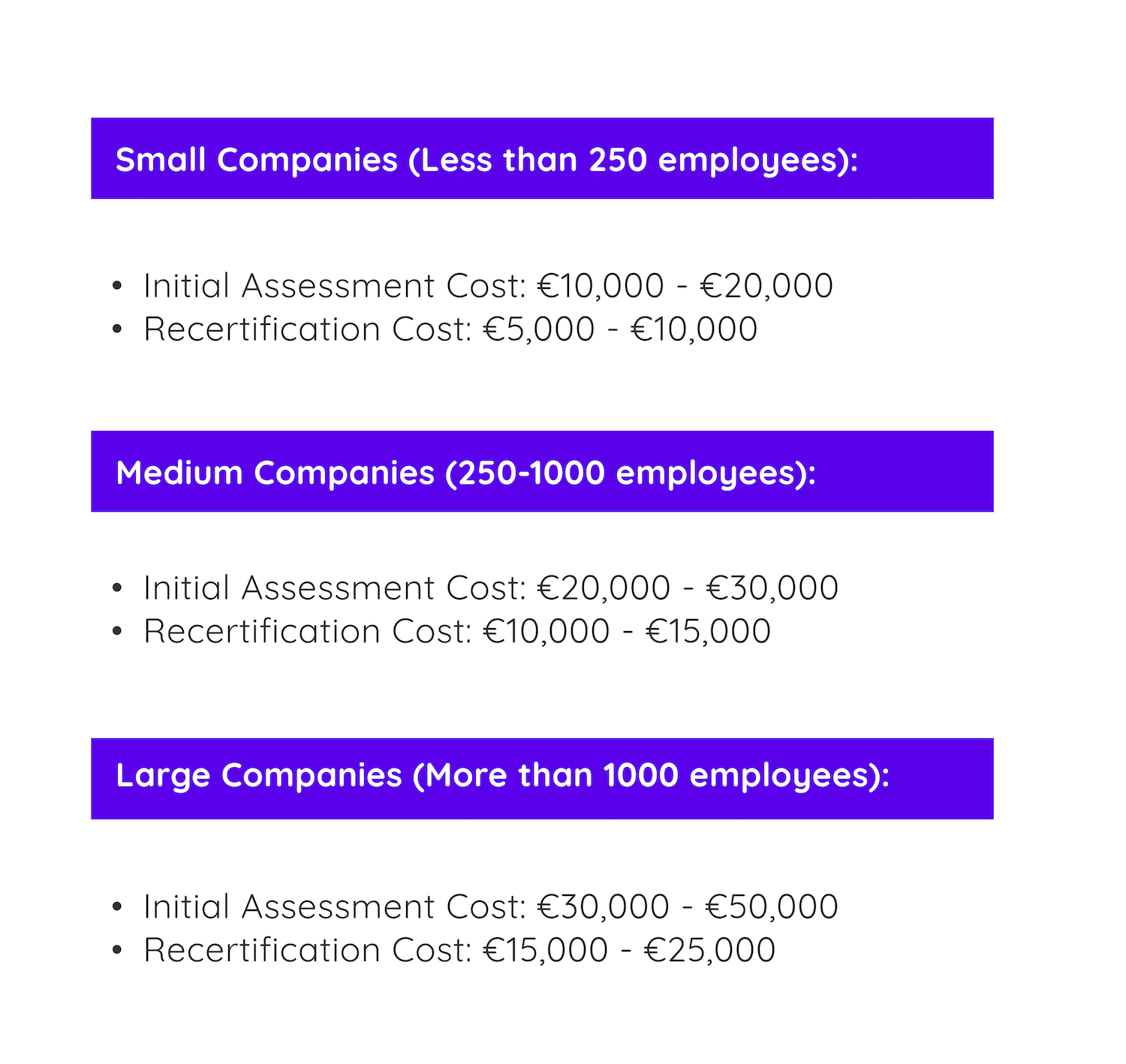
- Company Size and Complexity: The size and complexity of a company's operations play a crucial role in determining the cost of obtaining a TISAX® label. Larger companies with multiple business units, global operations, or complex IT infrastructures require more extensive assessments, leading to higher costs compared to smaller organizations with simpler structures.
- Scope of Information Security Measures: The depth and breadth of the information security measures already in place within a company impact the cost. Companies with robust security protocols and well-established data protection practices might require fewer adjustments, resulting in lower costs for achieving TISAX® compliance, while those with inadequate security measures might face higher expenses to meet the stringent TISAX® standards.
- Number of Locations Involved: If a company operates across multiple locations, the costs associated with assessing and ensuring the security of each site will increase. Each location requires a thorough evaluation to verify that all branches and subsidiaries adhere to the TISAX® requirements, leading to a proportional increase in the overall cost.
- Level of Security Compliance and Implementation Efforts: The degree to which a company aligns with TISAX® security standards before seeking certification affects the cost. Companies that already have a strong foundation of security practices in place will likely require fewer modifications and investments, resulting in lower overall costs compared to those needing substantial changes to meet the compliance standards.
- Consultation and Audit Services: Engaging external consultants and accredited TISAX® auditors to guide the company through the certification process incurs additional expenses. The expertise, reputation, and experience of the chosen consultants or auditors can impact the overall cost of obtaining a TISAX® label.
- Industry-Specific Requirements and Regulations: Some industries, especially those dealing with sensitive data like the automotive sector, might have additional regulatory requirements beyond the standard TISAX® criteria. Complying with these sector-specific standards can lead to higher costs for ensuring comprehensive security and data protection measures.
Understanding these factors elucidates why the price of a TISAX® label varies among different companies. By recognizing the intricacies involved in achieving TISAX® compliance, organizations can better prepare for the associated costs and allocate resources accordingly to ensure the robust protection of their information assets and data.
Please note that the above costs can fluctuate based on the complexity of the company's operations, the number of locations involved, and the depth of the security measures that need to be implemented.
Time required to obtain a TISAX® Label
- Preparation Phase (1-3 months): This phase involves internal preparation, including gap analysis, policy formulation, and security enhancement based on TISAX® requirements.
- Assessment Phase (2-4 months): An accredited TISAX® auditor conducts the assessment, examining the company's security measures and practices to ensure they comply with the TISAX® standards.
- Report Submission and Evaluation (1 month): The audit report is submitted to the ENX Association for evaluation, which typically takes a month for thorough examination.
- Label Issuance (2-4 weeks): After successful evaluation, the TISAX® label is issued, showcasing the company's compliance with stringent security standards.
In total, for a small company, the process could take around 4-6 months. For medium-sized companies, the timeline may extend to 6-8 months, and for larger companies, it might take 8-12 months. Delays may occur due to the complexity of the company's systems and the need for implementing comprehensive security measures.
It's important to note that these timeframes are average estimates and may vary depending on the company's existing security infrastructure and the speed at which the necessary changes can be implemented.
How long is a TISAX® certification valid?
The validity of a TISAX® label typically extends for three years from the date of issuance. After this period, companies are required to undergo a recertification process to ensure that they still meet the stringent information security standards set by TISAX®. This recertification process involves a reassessment of the company's information security measures, practices, and policies to ensure continued compliance with TISAX® requirements.
During the recertification process, the company's systems and practices are evaluated to determine whether they have kept pace with any changes in the TISAX® standards or any new security threats that may have emerged since the initial certification. The renewal process is similar to the initial certification process, with a comprehensive audit conducted by accredited TISAX® auditors.
The recertification timeline is usually comparable to the initial certification process, depending on the size and complexity of the company's operations. Recertification is a crucial step in maintaining the company's commitment to information security and demonstrating ongoing compliance with the stringent TISAX® standards. It helps ensure that companies continue to uphold the high levels of data protection required in the automotive industry.
If you're thinking about whether you need TISAX to make your business more competitive or are fundamentally concerned about information security in your organization, we're here to help! Book a free consultation here...
Achieve ISO 27001 in weeks, with real experts by your side.


.jpg)
Free SaaS webinar now open for all our visitors